Many industrial projects need more than off-the-shelf parts. Supports, brackets, skids, modifications and replacement components often have to be designed before they can be made or bought. Here is how the process typically works.
1. Understand the requirement
Design starts with the problem: what the item must do, the loads and conditions it will face, the space available and how it will be installed and maintained. Site measurements and photos of existing equipment are valuable inputs.
2. Concept and engineering
Engineers develop options, select materials and check strength, fit and function. Standards and client specifications guide material and design choices.
3. Technical drawings and documentation
Clear technical drawings show dimensions, tolerances, materials, finishes and assembly details. Good documentation lets fabricators and installers work accurately and makes future replacement easier.
4. Design review
Reviewing the design with operations, maintenance and safety teams catches problems while they are still cheap to fix.
5. Sourcing and fabrication
The drawings and specifications become the basis for an RFQ to fabricators and suppliers. See how to write an RFQ for industrial materials.
6. Delivery and installation
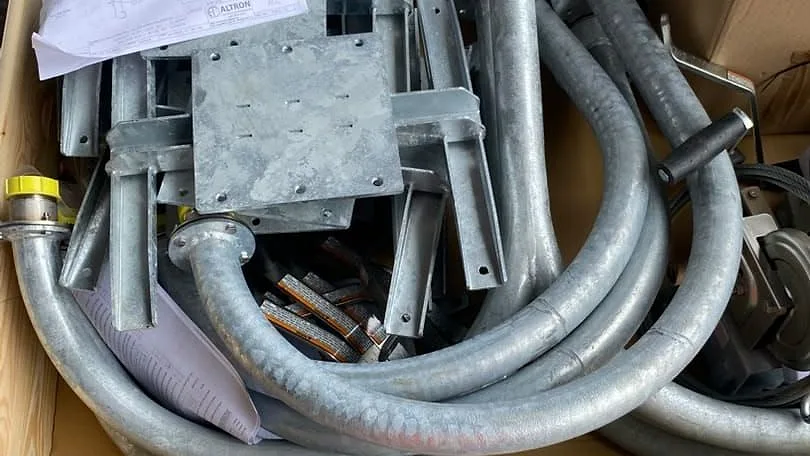
Fabricated items are inspected, packed and delivered for installation, often alongside pipes, valves and bolting and other project materials.
Why link design with procurement?
When design and procurement are handled together, designs reflect what can realistically be sourced, made and delivered on time, and fewer surprises appear at fabrication.
Design support from DE'ES CREST LIMITED
Our mechanical and industrial design service provides mechanical engineering support, industrial design, technical drawings, equipment solutions and engineering support services, connected to our procurement and supply chain solutions. We support oil & gas, construction and engineering and manufacturing clients. Request a quote to discuss your requirement.